Book Online Today

Guide to Microneedling
Microneedling is a powerful, evidence-backed skin treatment, but it’s not one-size-fits-all. In this blog, I explain how professional microneedling works, what it feels like, how many treatments are usually needed, and why careful product choice and aftercare matter. You’ll also learn how I tailor each treatment at The Pampered Cow, following advanced training with Dermalogica, to support safe, long-term skin health and results.
1/12/20264 min read
First and foremost, it’s important to understand that microneedling is a professional skin treatment and should only ever be performed by someone who is fully trained and qualified. I have completed advanced professional training with Dermalogica and passed the required assessments to ensure my clients are in safe hands here at The Pampered Cow.
Not all skins are suitable for microneedling and I would want to assess your skin in my studio, which is why I always recommend a consultation prior to treatment. This allows me to ensure you are the right candidate for microneedling service and is the most appropriate option for you and your skin goals.
Should you choose Microneedling as a treatment?
Professional microneedling is a well-established, evidence-backed treatment that has been refined over decades.
It is commonly used to improve the appearance of fine lines, uneven skin tone, skin texture, and enlarged pores. Microneedling isn’t a “magic fix” , it won’t remove lines or pores completely, but when performed correctly and consistently, it encourages the skin to do what it does best: repair and regenerate itself by stimulating collagen and elastin production.
How Does Microneedling Work?
Microneeling creates micro-injuries which your body responds by signalling the skin to produce more collagen and elastin in order to repair itself.
Over time, and with a course of treatments, this newly formed collagen helps to firm and strengthen the skin, making fine lines/pores and skin texture appear softer and less noticeable by improving skin structure and firmness, it can significantly reduce their appearance over timeThe microneedling device contains ultra-fine, sterile needles and can be used with different needle configurations (such as 9 or 24 needles), depending on your skin, your concerns, and the area being treated. Once activated, the device moves rapidly back and forth, creating controlled micro-injuries in the skin.
How Many sessions of Microneedling will I need?
In general, I usually recommend a course of at least 4–6 treatments between 6-8 (May vary) weeks apart to begin seeing visible changes in the skin. Microneedling works by stimulating the skin’s natural repair process, and these improvements build gradually over time (months), rather than appearing overnight. This is why microneedling is typically most effective when approached as a course of treatments rather than a one-off session. After your 4-6 treatments you would enter maintenance mode in which i give you a skin care plan and also advise on ongoing up keep between treatments.
Microneedling Devices: What’s the Difference?
Tradtionally microneedling can be performed using different tools, including rollers, stampers, and professional microneedling pens. While the basic principle is similar, results can vary significantly. As a professional, I only use a certified professional Dermalogica pen. Rollers and stampers apply needles at a fixed depth and angle, which means they offer less control and consistency. Professional microneedling pens, on the other hand, allow for adjustable needle depth, controlled speed, and a fully tailored treatment, depending on the area of the face and the individual’s skin.
This level of control is essential for achieving effective results while minimising unnecessary trauma to the skin. Professional microneedling pens also use sterile, single-use needle cartridges, which are changed for every client to maintain the highest standards of hygiene and safety.
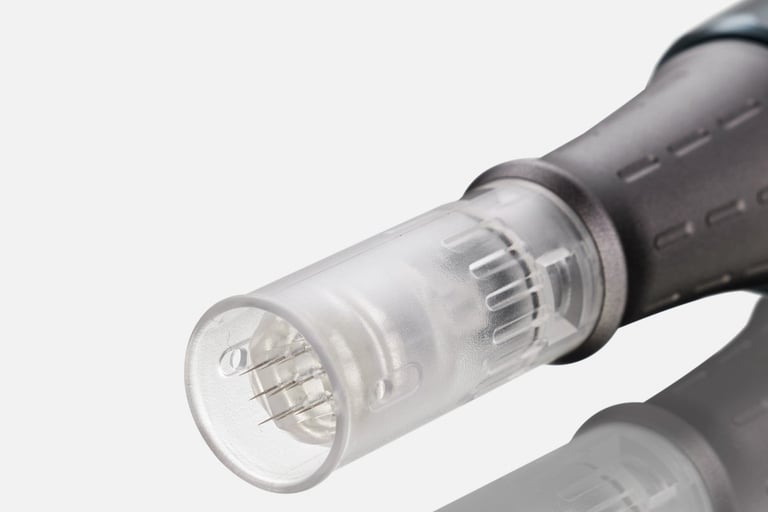
9-needle microneedling cartridge made from medical-grade stainless steel
Does Mirconeedling hurt?
Some areas of the face can feel more sensitive than others, which is completely normal. Sensitivity varies depending on skin thickness and the underlying bone structure. For many clients, the forehead tends to feel the most intense, while areas such as the cheeks are often much milder. Many of my clients describe the feeling as a little “spicy”. Some even enjoy the sensation, while others simply tolerate it. It really does come down to personal preference and individual pain threshold. I always take time to prepare my clients properly, explaining the treatment and ensuring they feel relaxed and informed throughout. Understanding what’s happening and feeling at ease makes a big difference to how comfortable the experience feels.
Ingredients Commonly Used With Professional Microneedling (and Why)
Serum applied to the skin must be carefully chosen, skin-safe, and suitable for this type of advanced treatment and clients skin. Using the wrong products can increase the risk of irritation, inflammation, sensitisation, or unwanted skin reactions.
This is why microneedling should never be treated as a “mix and match” treatment.
I only use ingredients that are specifically selected to support skin healing, recovery, and regeneration, and that align with the goal of the treatment being performed. Product choice is always based on your skin, your concerns, and how your skin is likely to respond on the day.
Below is a simple overview of the types of ingredients commonly used in professional microneedling and why they’re chosen.
Hyaluronic Acid
Used to deeply hydrate the skin and support healing. Hyaluronic acid helps maintain moisture levels, improves comfort during treatment, and supports the skin’s natural repair process.Growth-Factor or Regenerative Serums
These are designed to support skin renewal and encourage a healthy healing response following microneedling.Polynucleotides
Chosen for their ability to support skin regeneration, improve hydration at a cellular level, and encourage healthier skin function during the repair phase.Barrier-Supporting and Soothing Ingredients
Ingredients that calm inflammation and support the skin barrier are often used to reduce redness and aid recovery after treatment.
Red Light Therapy After Microneedling
Depending on my client and their needs, I may recommend red light therapy after a microneedling treatment to support the skin’s healing and recovery process.
Red light therapy works by delivering specific wavelengths of light into the skin, which are known to support cellular repair, reduce inflammation, and encourage collagen production. When used after microneedling, it complements the treatment by helping the skin to settle and recover more comfortably.
I use professional LED light therapy from Dermalux, which is clinically recognised and widely used in professional skin clinics.It does not add heat or cause damage to the skin, and it is completely non-invasive.
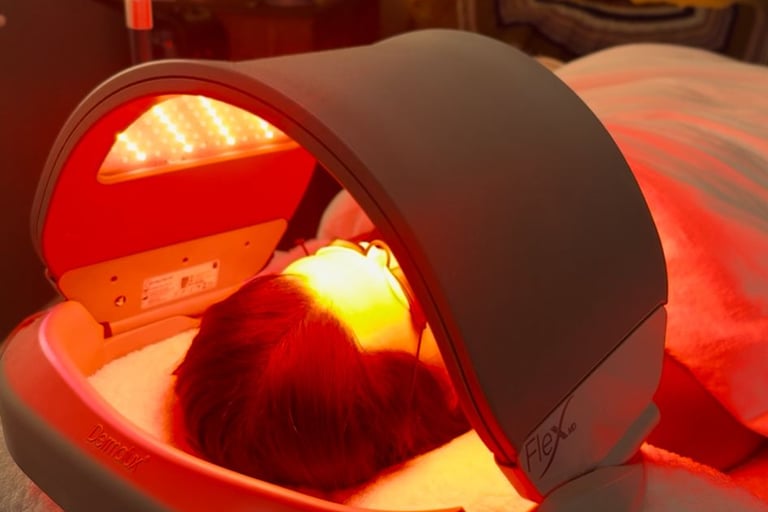
Dermalux Flex medical grade red light therpy
Do I Need to Do Anything Before My Treatment at The Pampered Cow?
Yes, and it’s crucial that you follow my professional skin preparation guidance before your microneedling treatment to ensure the best possible results and to keep your skin safe.
Prepping the skin correctly helps to:
Reduce the risk of irritation or sensitivity
Support optimal healing
Allow the skin to respond more effectively to microneedling
You can find my full pre-treatment skin preparation guide here:
(link to guide)
If you’re ever unsure about anything before your treatment with me, I’m always happy to advise, it’s far better to ask than to guess.
Indulge in rejuvenating facials and soothing massages. Home based professional beauty studio , Junes Cottage, Stowe Lane, Hixon, Stafford ST18 0nb
© 2025. All rights reserved. The Pampered Cow, Stafford, UK
Important:
The Pampered Cow is a female-only by appointment only and a home treatment studio.
Male clients are only accepted by existing client referral and at the therapist’s discretion.
Services